BoreholeDrilling
We drill boreholes to depths of 100ft–350ft+, guided by a geophysical survey and finished with PVC construction that keeps the well clear, stable, and productive for decades.
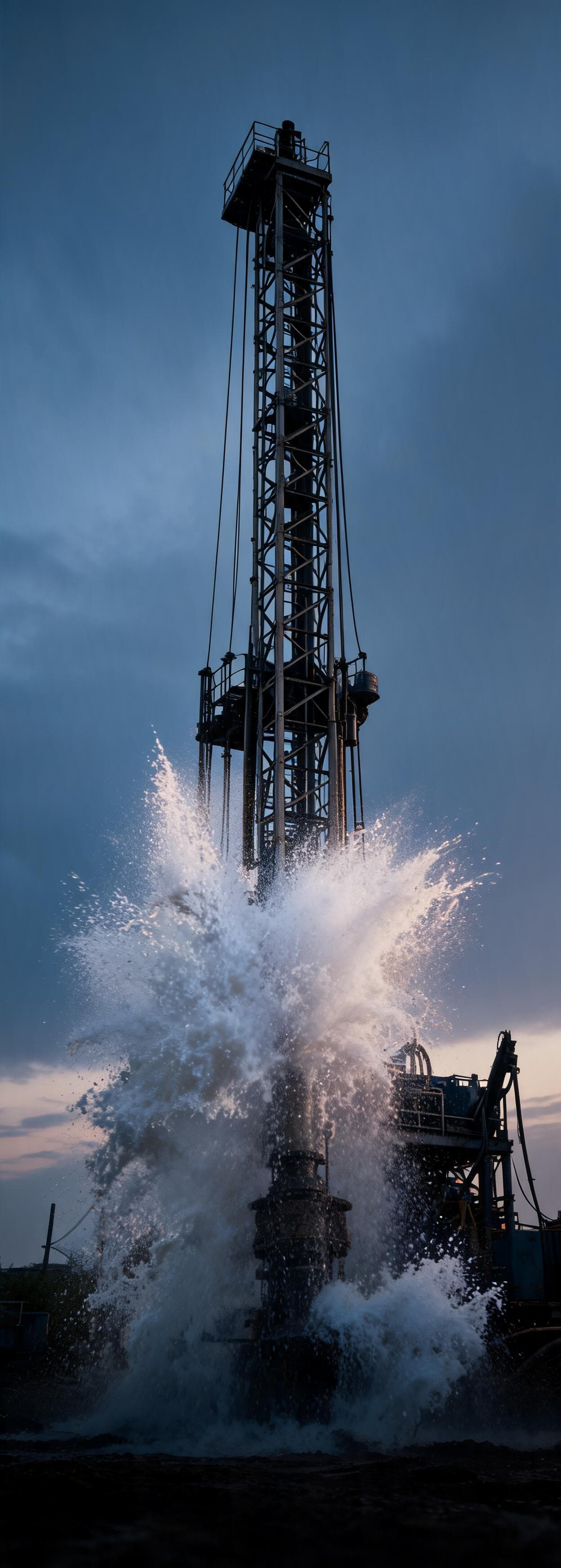
What Borehole Drilling Involves
Borehole drilling is the process of creating a vertical well that reaches down into a water-bearing rock layer, or aquifer, so groundwater can be pumped up to the surface. Depth varies by location — in most of Ghana, productive boreholes sit anywhere between 100ft and 350ft+, depending on the local geology.
Before any drilling starts, we use the results of a geophysical survey to choose the exact drill point most likely to intersect a strong aquifer. Once drilling begins, we rotary-drill through the overburden and into bedrock, monitoring the strata as we go so we know precisely where water is entering the hole.
As the borehole is completed, we install PVC casing along its length. The casing prevents the surrounding soil and loose rock from collapsing into the well, keeps out surface contamination, and creates a clean, uninterrupted column of water for the pump to draw from.
- Depths engineered to your site's geology, from 100ft to 350ft+
- Construction sized and slotted to match the aquifer's yield
- Cuttings and drilling records kept for every well we sink
A borehole is only as good as the ground it's placed in — that's why the drill point is decided by data, not guesswork.
Why it matters
The foundation of every water project we deliver. Every job is scoped to your land, your geology, and your budget — no guesswork, no oversized quotes.
How we deliver borehole drilling
Site Preparation
We confirm access, drilling orientation, and the exact coordinates identified by the geological survey before equipment arrives on site.
Rotary Drilling
Our rig drills through the overburden and into bedrock, logging strata changes and water strikes as the hole advances.
Casing & Completion
PVC casing is installed to the required depth, the annulus is sealed, and the well head is finished ready for pump installation.
What you gain
Reliable Access
A dedicated water source on your own land, year-round.
Built to Last
PVC casing protects the well from collapse and debris.
Data-Led Placement
Drill points chosen from real geophysical readings.
Right-Sized Wells
Depth matched to the aquifer, not over- or under-drilled.
Frequently asked questions about Borehole Drilling
Depth depends on the site's geology and the groundwater target. Mega Resources uses the survey results and drilling conditions to determine the appropriate depth rather than assuming the same depth for every site.
Services commonly paired with Borehole Drilling
Validate the drill point before mobilising a rig.
Pumping TestsConfirm sustainable yield after drilling is complete.
Observation WellsMonitor groundwater conditions where supply is not the only project objective.
Dewatering WellsControl groundwater for suitable construction and excavation projects.
Ready to sink a borehole on your land?
We'll start with a geological survey to confirm the right spot, then drill and case your well from start to finish.